Baicalein Benefits: The Skullcap Flavonoid Antioxidant Explained
| What it is | Baicalein is a flavonoid antioxidant concentrated in the root of Chinese skullcap (Scutellaria baicalensis). |
| How it works | It scavenges free radicals and is studied for supporting a balanced inflammatory response and healthy, protected cells. |
| Label check | Look for baicalein (the active aglycone) from a named skullcap source, ideally in an absorption-friendly delivery. |
Baicalein benefits: a quiet antioxidant with a long pedigree
Not every ingredient on a supplement label is a household name, and baicalein is a good example. It rarely gets top billing, yet it is one of the most-researched plant flavonoids in the antioxidant literature. Baicalein is the standout compound in the root of Chinese skullcap (Scutellaria baicalensis), a herb with a long history in traditional East Asian practice — and it is one of the thirteen actives inside LymphTonic.
This guide explains the real baicalein benefits in plain terms: what the molecule is, how it behaves as an antioxidant, how it differs from its better-known cousin baicalin, the dosing context researchers use, and how to read a label so the flavonoid you are paying for is the active form. If you have ever wondered why a lymphatic and detox tonic would include a skullcap flavonoid, this is the answer.
What is baicalein?
Baicalein is a flavone — a subclass of flavonoids, the large family of colourful plant compounds that includes quercetin, hesperidin and many others. Flavonoids are best known as antioxidants, molecules that help the body mop up reactive, unstable particles called free radicals before they can damage cells. Baicalein is one of the more potent members of that family, and it is found in unusually high concentrations in the dried root of Chinese skullcap.
Skullcap root has been used for centuries in traditional formulas, and modern chemistry has since identified baicalein and its relatives as the compounds carrying much of that traditional reputation. When a supplement lists baicalein specifically — rather than just “skullcap extract” — it is pointing to the concentrated, characterised active rather than the whole herb.
Baicalein vs baicalin: why the two names matter
If you research this ingredient you will quickly bump into a near-twin: baicalin. The two are easy to confuse but genuinely different, and the distinction is worth understanding.
- Baicalin is the glycoside — the form with a sugar molecule (glucuronic acid) attached. It is the form most abundant in the raw root.
- Baicalein is the aglycone — the sugar-free, “naked” active. It is generally regarded as the more directly active molecule.
In the body, the two are linked: gut bacteria can cleave the sugar off baicalin and convert it into baicalein, and baicalein can be reconjugated back again. That interconversion is part of what makes the flavonoid interesting to researchers. For a shopper, the practical point is simply this: a product that specifies baicalein is naming the active aglycone, which is what most of the mechanistic research focuses on.
How baicalein works as an antioxidant
Baicalein is a flavone — a flat, ringed plant molecule whose hydroxyl groups can hand an electron to an unstable radical without becoming destructive itself. A 2017 review of the therapeutic potentials of baicalin and baicalein against inflammatory disorders gathers the laboratory work behind that description.
The core of baicalein’s activity is its structure. Flavones like baicalein carry hydroxyl (–OH) groups arranged in a way that lets them donate electrons to neutralise free radicals — effectively defusing reactive molecules that would otherwise trigger a chain reaction of oxidative damage. Baicalein is also studied for its ability to support the body’s own antioxidant defences and to interact with signalling involved in the inflammatory response.
That second point is where baicalein overlaps with several other actives in a well-built formula. Like curcumin, it is associated with helping the body keep its inflammatory response balanced — a theme you can read more about in our guide to curcumin and black pepper absorption. And like quercetin, it belongs to the flavonoid family, sharing both the antioxidant character and the absorption challenge covered in quercetin phytosome versus regular quercetin. Understanding baicalein alongside those two makes the logic of a multi-antioxidant blend much clearer.
A full antioxidant team, in one daily tonic
LymphTonic pairs baicalein with curcumin, quercetin phytosome, vitamin E and ten more botanicals in an alcohol-free liquid — formulated for absorption and backed by a 60-day guarantee.
See LymphTonic Packages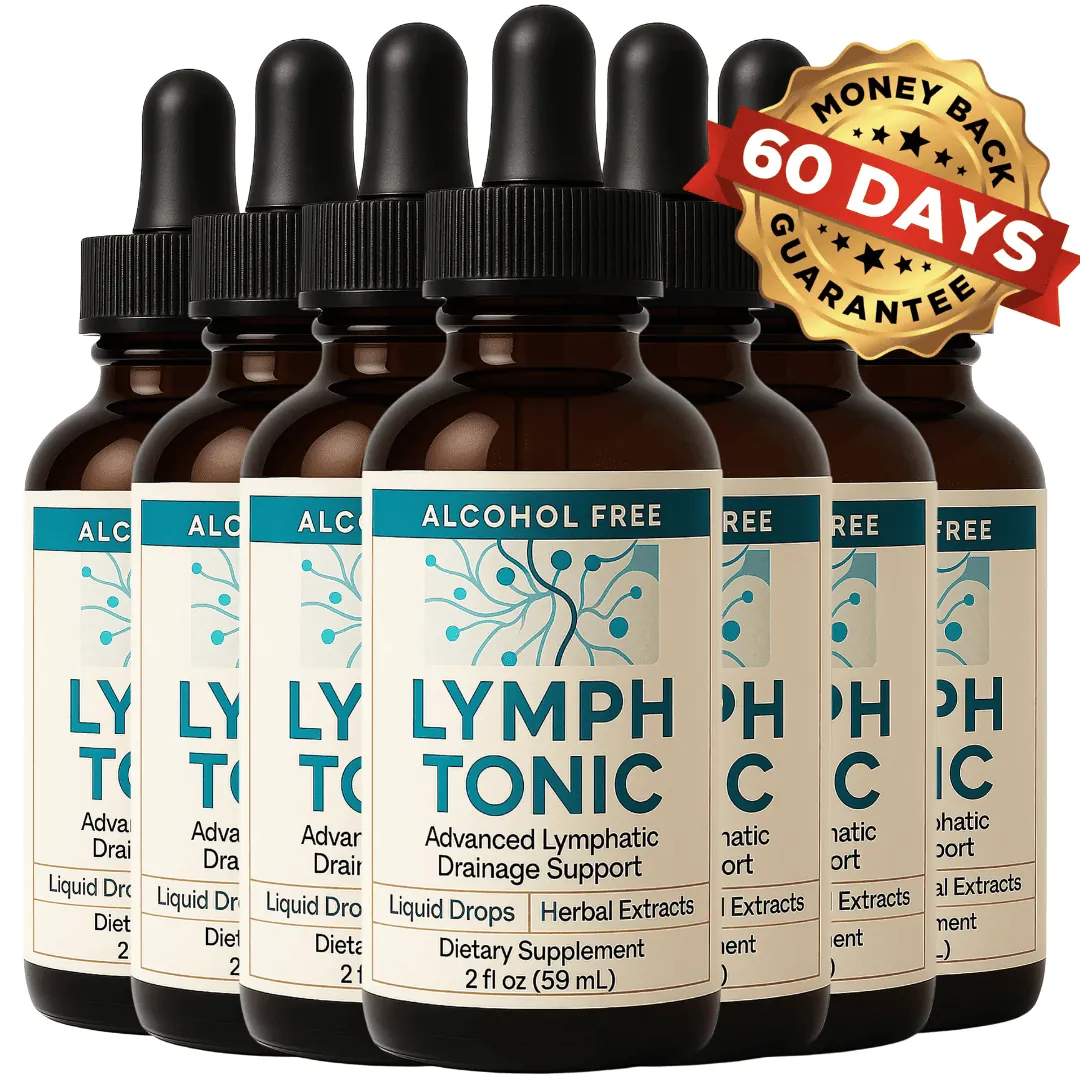
Why baicalein fits a lymphatic and detox formula
Pharmacology reviews of baicalin and baicalein’s pharmacological actions group the compound with the vascular- and inflammation-modulating flavonoids rather than the stimulants, which is the company it keeps in a drainage-focused blend. If the antioxidant vocabulary here is new, the companion piece on how antioxidants work and what oxidative stress actually means covers the chemistry from the ground up.
Detox and lymphatic support are, at their core, about helping the body do its own housekeeping — clearing waste, managing fluid, and protecting tissues from the wear and tear of oxidative stress. Antioxidants are central to that picture, because oxidative stress is one of the loads the body has to keep under control day after day. A flavonoid like baicalein adds another line of antioxidant defence to a blend that already leans heavily on plant polyphenols.
It also sits comfortably beside the circulation-focused actives. When tissues are well protected and the inflammatory response stays calm, the drainage-and-flow ingredients — think horse chestnut for legs and circulation and the enzyme profiled in what nattokinase is and how it supports blood flow — are working in a friendlier environment. For the everyday habits that tie it all together, see how to support lymphatic drainage naturally, or head back to the LymphTonic homepage.
Dosing context and absorption
Skullcap root has been characterised in detail: work on the flavones from the root of Scutellaria baicalensis documents baicalein alongside its sister compounds and their antioxidant behaviour. Proprietary blends do not disclose per-ingredient amounts, so treat any specific milligram figure quoted online with caution.
Baicalein and skullcap extracts appear across a wide dose range in the research, and because it is usually studied as part of standardised extracts (or in combination formulas), there is no single universal serving that applies to every product. As with most flavonoids, the more meaningful questions are about form and delivery rather than a single milligram figure.
Bioavailability is the recurring flavonoid challenge. On their own, many flavones and flavonols are absorbed only modestly, because they are poorly water-soluble and are rapidly processed by the gut and liver. This is exactly the problem that delivery technologies aim to solve — whether by pairing a compound with a phospholipid (as with quercetin phytosome) or by carrying it in a liquid base alongside a phospholipid such as phosphatidylcholine, as LymphTonic does. A flavonoid that reaches circulation is worth far more than one that never leaves the gut.
What to look for on the label
- The active named — “baicalein” (the aglycone) or a standardised Scutellaria baicalensis root extract, not just “skullcap.”
- The right species — Chinese skullcap (Scutellaria baicalensis) is the baicalein-rich one, distinct from American skullcap.
- An absorption strategy — a phospholipid or liquid delivery that helps a poorly-soluble flavonoid become usable.
- Good company — baicalein alongside complementary antioxidants like curcumin and quercetin, as in LymphTonic’s blend.
Safety notes
Baicalein and Chinese skullcap have a long history of traditional use. As with any concentrated botanical, if you are pregnant or breastfeeding, take prescription medication (flavonoids can influence how some drugs are processed), or have a medical condition, check with your doctor before adding a baicalein or skullcap supplement. Note that Chinese skullcap (Scutellaria baicalensis) is different from American skullcap, and some low-quality “skullcap” products have historically been adulterated — another reason to choose a clearly labelled, well-made formula. This article is general information about a food-derived flavonoid, not medical advice, and baicalein is not intended to diagnose, treat, cure or prevent any disease.
Frequently asked questions
What is baicalein?
Baicalein is a flavonoid — a plant antioxidant — found most abundantly in the root of Chinese skullcap (Scutellaria baicalensis). It is valued as a free-radical scavenger and for its studied role in supporting a balanced inflammatory response and healthy cells. It is a general wellness ingredient, not a drug.
What is the difference between baicalein and baicalin?
They are closely related. Baicalin is the glycoside form, meaning it has a sugar molecule attached; baicalein is the aglycone, the sugar-free active form. In the body, gut bacteria can convert baicalin into baicalein, which is generally considered the more directly active molecule.
What are the benefits of baicalein?
Baicalein is studied primarily as a potent antioxidant that helps neutralise free radicals and protect cells from everyday oxidative stress. It is also researched for its role in supporting a balanced inflammatory response. In a lymphatic and detox context it complements other antioxidants and circulation-supporting botanicals.
Is baicalein the same as skullcap?
No. Skullcap is the plant; baicalein is one of the key flavonoids concentrated in its root. Chinese skullcap (Scutellaria baicalensis) is the species richest in baicalein and its relatives, and it is different from American skullcap, which has a different traditional use.
Is baicalein well absorbed?
Like many flavonoids, baicalein can have limited bioavailability on its own. Taking it as part of a well-designed formula — for example alongside a phospholipid base and other absorption-friendly ingredients — is one way products aim to make flavonoids more usable by the body.
- Dinda B, Dinda S, DasSharma S, et al. “Therapeutic potentials of baicalin and its aglycone, baicalein against inflammatory disorders.” European Journal of Medicinal Chemistry. 2017. pubmed.ncbi.nlm.nih.gov
- Liang W, et al. “Baicalin and baicalein: A review of their pharmacological actions.” Frontiers in Pharmacology / PMC. 2021. ncbi.nlm.nih.gov
- Gasiorowski K, et al. “Flavones from root of Scutellaria baicalensis: antioxidant and other properties.” Current Neuropharmacology. 2011. ncbi.nlm.nih.gov
- National Center for Complementary and Integrative Health. “Antioxidants: In Depth.” NCCIH. nccih.nih.gov
† These statements have not been evaluated by the FDA. This product is not intended to diagnose, treat, cure or prevent any disease. This article is for general information only and is not medical advice.