What Is Nattokinase and How It Supports Healthy Blood Flow
| What it is | Nattokinase is an enzyme extracted from natto, a traditional Japanese fermented-soybean food, produced during fermentation by Bacillus subtilis. |
| How it works | It is a fibrinolytic enzyme — studied for its role in supporting the body's normal breakdown of fibrin and helping keep blood flowing smoothly. |
| Label check | Dose is measured in fibrinolytic units (FU), not just milligrams — look for a stated FU potency such as 2,000 FU. |
What is nattokinase and how it supports healthy blood flow
If you have scanned the label of a modern circulation or lymphatic supplement, you have probably run into a slightly unusual name: nattokinase. It is not a herb, a vitamin or an antioxidant — it is an enzyme, and it works differently from every other active in a botanical blend. So the sensible question is exactly the one people search for: what is nattokinase, and how does it support healthy blood flow? This guide answers that from the ground up, then explains how the dose is measured and what to check before you buy. Nattokinase is one of the thirteen actives in LymphTonic, and it earns its place for reasons worth understanding.
Where nattokinase comes from
Nattokinase is a serine protease produced by Bacillus subtilis natto during the fermentation of soybeans into natto. It was first described in 1987 as a novel fibrinolytic enzyme in the vegetable cheese natto, a staple of the Japanese diet long before anyone put it in a capsule.
Nattokinase is extracted from natto, a traditional Japanese breakfast food made by fermenting cooked soybeans with a beneficial bacterium called Bacillus subtilis var. natto. During that fermentation the bacteria produce the nattokinase enzyme, which was first identified and named by the Japanese researcher Dr. Hiroyuki Sumi in the early 1980s. Natto itself has been eaten in Japan for well over a thousand years; nattokinase is the isolated, concentrated enzyme drawn from it and standardised for supplement use.
One practical note that follows from its origin: natto is a soy food, so nattokinase is a soy-derived ingredient. Whole natto is also naturally rich in vitamin K2, but purified nattokinase supplements are typically processed to remove vitamin K — a detail that matters to anyone whose doctor manages their vitamin K intake.
How nattokinase supports healthy blood flow
The enzyme’s interest to researchers is fibrinolytic: under laboratory conditions it degrades fibrin, the protein mesh that gives a clot its structure. A review of nattokinase as an oral antithrombotic agent collects the human and animal work and is candid about its scale.
To understand the mechanism you need one piece of background. Your body is constantly balancing two opposing jobs in the bloodstream: forming small amounts of a protein called fibrin (the mesh that helps a clot hold together) and then breaking that fibrin back down once it is no longer needed. That breakdown process is called fibrinolysis, and it is what keeps blood fluid and flowing rather than sludgy.
Nattokinase is described in the research as a fibrinolytic enzyme — meaning it has been studied for its ability to support that normal fibrin-breakdown side of the balance. By supporting healthy fibrinolytic activity, nattokinase is associated with helping maintain smooth, unobstructed blood flow and normal blood viscosity. Smooth circulation is not just a cardiovascular nicety, either: the lymphatic and circulatory systems work as partners in moving fluid around the body, so keeping blood flowing well complements the drainage work the rest of a lymphatic formula is doing.
Support smooth flow, every day
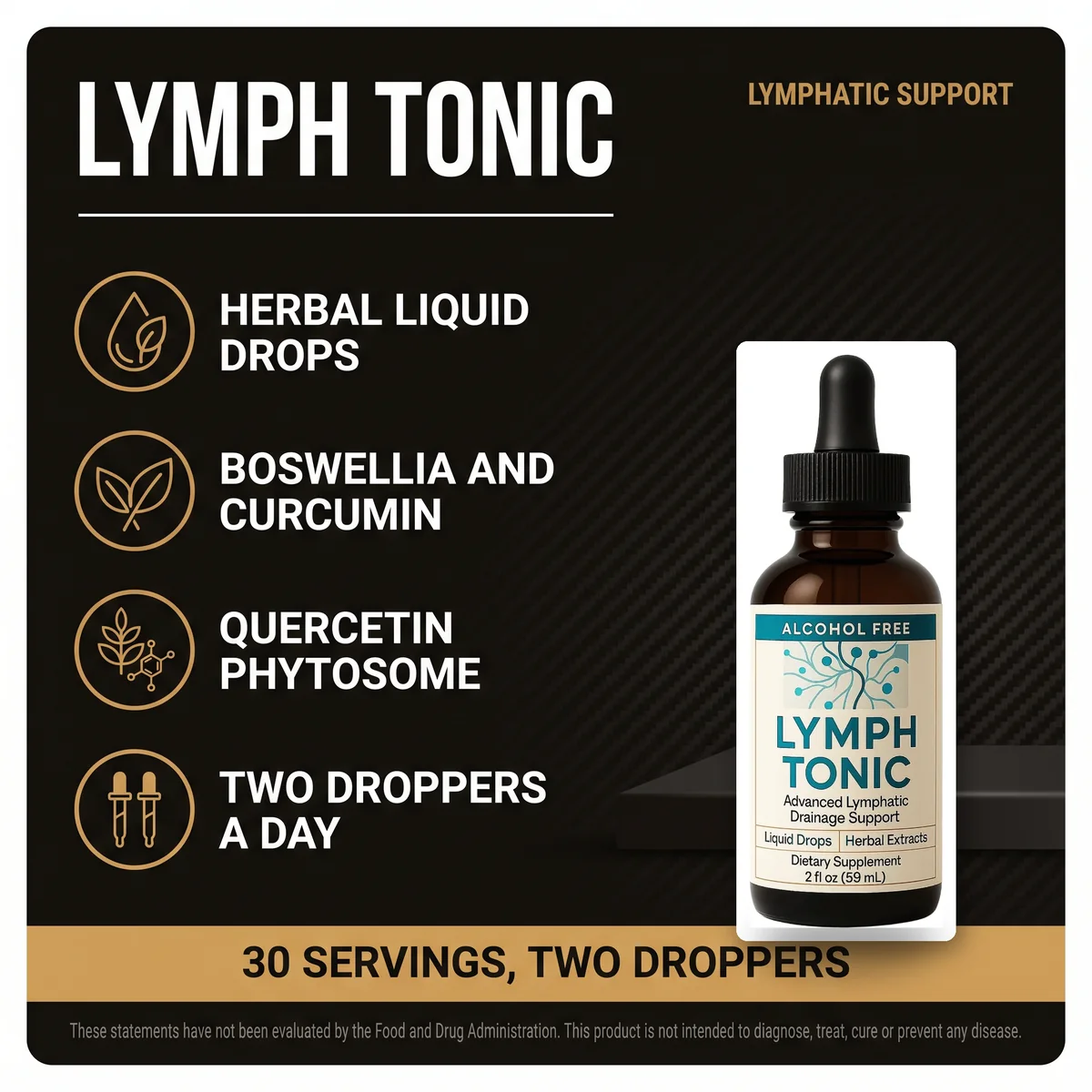
LymphTonic combines standardised nattokinase with twelve circulation and drainage botanicals in one alcohol-free daily tonic — backed by a 60-day guarantee.
See LymphTonic Packages
Why nattokinase is measured in FU, not milligrams
Here is the single most important thing to know before you compare products. Because nattokinase is an enzyme, what matters is not how much powder is present but how active that enzyme is. Enzyme activity is measured in fibrinolytic units (FU). A common reference potency in the research is around 2,000 FU per serving, which corresponds to roughly 100 mg of a standardised extract — but the FU figure is what actually tells you the strength.
This means a label that lists only "nattokinase 100 mg" without an FU value is leaving out the number that counts. Two products with the same milligram weight can have very different enzyme activity. When you evaluate any nattokinase product — on its own or inside a blend — the FU potency is the figure to look for.
What to look for on the label
- A stated FU potency — the real measure of an enzyme's strength (e.g. 2,000 FU).
- Sourced from natto fermentation — the traditional, well-studied origin.
- Vitamin K status noted — most supplement-grade nattokinase is K-removed.
- Made in a GMP-certified facility — enzymes are delicate and quality processing matters, as with LymphTonic.
Nattokinase and the lymphatic connection
It is fair to ask why a fibrinolytic enzyme belongs in a lymphatic tonic at all. The answer is that fluid movement in the body is a team effort. Your arteries deliver, your veins return, your lymphatic vessels sweep up the leftover fluid, proteins and waste that the bloodstream leaves behind, and everything eventually rejoins the circulation near the heart. When blood is flowing smoothly and viscosity stays normal, the whole downstream system has an easier job — less back-pressure, less pooling, and a cleaner hand-off between the circulatory and lymphatic networks. Nattokinase supports that first link in the chain. It does not act on lymph directly, but by helping keep circulation smooth it complements the vessel-tone and connective-tissue botanicals that do. That is the logic of a blend: each active covers a different part of the same fluid-handling job rather than duplicating one another.
Safety: who should be cautious
Because the mechanism touches clotting, nattokinase is one of the few supplement ingredients with a genuinely important interaction list. A review of nattokinase in the prevention and treatment of cardiovascular disease sets out the cautions, and anyone taking anticoagulant or antiplatelet medication should speak to a doctor first. For a gentler circulation-adjacent botanical, see ginger extract for circulation and digestion.
This is the one active in the blend where a safety conversation is genuinely important. Because nattokinase supports the body's fibrin-breakdown activity, it is not appropriate to combine casually with blood-thinning or anti-platelet medication, and it should generally be paused before any surgery or dental procedure. Anyone who takes anticoagulants (such as warfarin), has a bleeding disorder, is pregnant or breastfeeding, or has an upcoming operation should talk to their doctor before taking a nattokinase supplement. People with a soy allergy should also avoid it, given its origin. None of this makes nattokinase unusual among circulation ingredients — it simply means it deserves an informed decision rather than a casual one.
How nattokinase fits with the rest of the blend
Nattokinase is the flow specialist of the formula — it works on the blood itself, while the botanicals around it work on vessel tone, capillary integrity and the inflammatory balance that keeps everything comfortable. That is a deliberate combination. To see the vessel-tone side of the story, read about horse chestnut extract benefits for legs and circulation. For the antioxidant and balanced-response side, our guide to curcumin and black pepper absorption explains how the blend keeps its most famous antioxidant usable. And for the daily-habits layer that makes any supplement work better, see how to support lymphatic drainage naturally or head back to the LymphTonic homepage.
Sensible expectations
Nattokinase is a support ingredient for healthy, smooth circulation as part of a balanced routine — it is not a medication and is not intended to diagnose, treat, cure or prevent any disease, including any cardiovascular or clotting condition. Used sensibly and consistently, and with a doctor's sign-off if any of the cautions above apply to you, it is a well-studied enzyme that complements the botanical side of a lymphatic tonic nicely.
Frequently asked questions
What is nattokinase?
Nattokinase is an enzyme extracted from natto, a traditional Japanese fermented-soybean food. The enzyme is produced during fermentation by the bacterium Bacillus subtilis and was first identified by Dr. Hiroyuki Sumi in the early 1980s. In supplements it is isolated, concentrated and standardised for its enzyme activity.
How does nattokinase support blood flow?
Nattokinase is a fibrinolytic enzyme, meaning it has been studied for its role in supporting the body's normal breakdown of fibrin, the protein mesh that helps clots hold together. Supporting healthy fibrinolytic activity is associated with helping maintain smooth blood flow and normal blood viscosity. It supports normal circulation and is not a treatment for any condition.
Why is nattokinase measured in FU?
Because nattokinase is an enzyme, its strength depends on how active it is, not just how much powder is present. Enzyme activity is measured in fibrinolytic units (FU). A common reference is about 2,000 FU per serving. A label listing only milligrams, with no FU value, leaves out the number that actually tells you the potency.
Who should not take nattokinase?
Anyone taking blood-thinning or anti-platelet medication, with a bleeding disorder, preparing for surgery or a dental procedure, or who is pregnant or breastfeeding should talk to a doctor before using nattokinase. Because it is derived from soy, people with a soy allergy should avoid it.
Does nattokinase contain vitamin K?
Whole natto is naturally rich in vitamin K2, but purified nattokinase supplements are usually processed to remove vitamin K. If your doctor manages your vitamin K intake, confirm the vitamin K status of any product before taking it.
- Chen H, et al. “Nattokinase: A Promising Alternative in Prevention and Treatment of Cardiovascular Diseases.” Biomarker Insights. 2018. ncbi.nlm.nih.gov
- Weng Y, et al. “Nattokinase: An Oral Antithrombotic Agent for the Prevention of Cardiovascular Disease.” Int J Mol Sci. 2017. ncbi.nlm.nih.gov
- Sumi H, Hamada H, Tsushima H, et al. “A novel fibrinolytic enzyme (nattokinase) in the vegetable cheese Natto; a typical and popular soybean food in the Japanese diet.” Experientia. 1987. pubmed.ncbi.nlm.nih.gov
- National Cancer Institute. “Introduction to the Lymphatic System.” SEER Training Modules. training.seer.cancer.gov
† These statements have not been evaluated by the FDA. This product is not intended to diagnose, treat, cure or prevent any disease. This article is for general information only and is not medical advice.