Curcumin and Black Pepper: Why Piperine Boosts Absorption
| The problem | Curcumin, the active in turmeric, is famously hard for the body to absorb on its own — most of a plain dose never reaches the bloodstream. |
| The fix | Piperine, the compound that makes black pepper sharp, dramatically slows how quickly the body clears curcumin, raising its bioavailability. |
| Label check | Look for curcumin standardised to curcuminoids paired with a stated source of piperine (or another proven delivery system). |
Curcumin and black pepper: why piperine boosts absorption
Curcumin is one of the most researched plant compounds in the world — and also one of the most frustrating. On paper it is a brilliant antioxidant with a long traditional history and thousands of studies behind it. In practice, swallow a dose of plain curcumin and the great majority of it is metabolised and cleared before it can do much of anything. This is the curcumin bioavailability problem, and understanding it explains one of the most common pairings you will ever see on a supplement label: curcumin and black pepper.
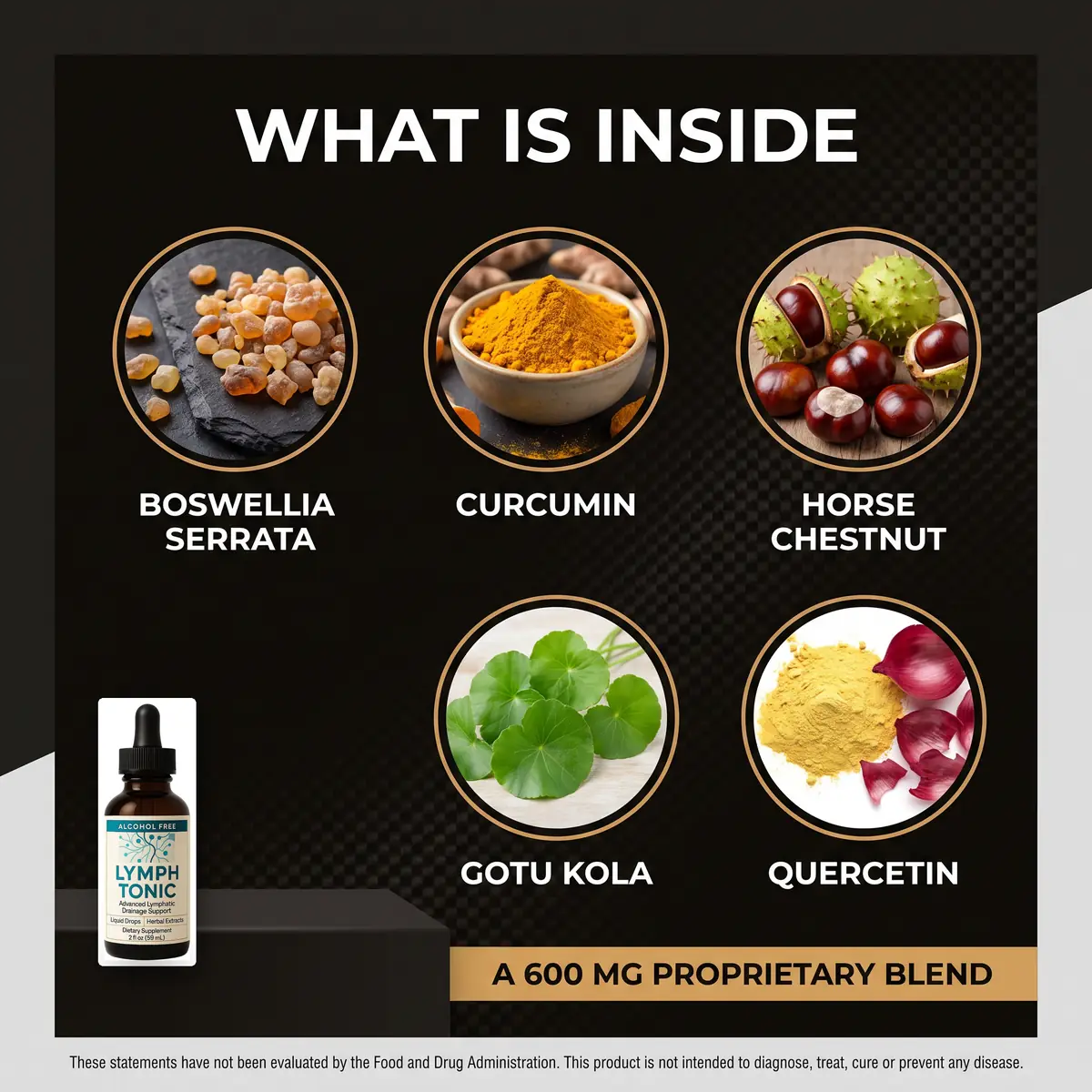
This guide explains why curcumin is so poorly absorbed, exactly how the piperine in black pepper changes that, what the numbers from the research actually say, and how to read a label so you know you are getting a form your body can use. Both curcumin and black pepper extract are actives in LymphTonic, and they are in the same bottle for a very deliberate reason.
Why curcumin is so hard to absorb
Curcumin’s problem is not potency but pharmacokinetics: it is poorly soluble in water, rapidly metabolised in the gut wall and liver, and quickly cleared. A review of delivery, bioavailability, absorption and metabolism of curcumin traces each of those bottlenecks in turn.
Curcumin is the main curcuminoid in turmeric (Curcuma longa), the golden-yellow spice. It is the compound responsible for most of turmeric's studied effects. The trouble is that curcumin has three strikes against it in the digestive tract:
- Poor water solubility — curcumin barely dissolves in water, so relatively little is available for the gut to take up in the first place.
- Rapid metabolism — the small amount that does get absorbed is quickly transformed by the liver and intestinal wall (a process called glucuronidation) into forms that are flushed out fast.
- Quick elimination — what survives is cleared from the body rapidly, leaving little time to act.
Put those together and a plain curcumin dose behaves like a leaky bucket. This is not a marketing exaggeration — it is one of the best-documented facts in the nutrition literature, and it is precisely why serious formulas never use bare curcumin on its own.
How piperine changes the picture
Piperine, the pungent alkaloid in black pepper, slows the conjugation reactions that clear curcumin from the bloodstream. The classic human study on the influence of piperine on the pharmacokinetics of curcumin is the source of the widely repeated figure, and it is worth reading for its small sample size as much as for its result.
Piperine is the alkaloid that gives black pepper (Piper nigrum) its bite. Its usefulness here has nothing to do with flavour and everything to do with metabolism. Piperine temporarily slows down some of the enzymes and transporters your body uses to metabolise and eliminate compounds — most importantly the glucuronidation pathway that clears curcumin so quickly, along with a transporter called P-glycoprotein that pumps substances back out of cells.
By easing off those clearance mechanisms for a while, piperine lets more curcumin stay intact and circulate for longer. The most-cited human study on this pairing, published by Shoba and colleagues in 1998, found that adding just a small amount of piperine increased the bioavailability of curcumin by around 2,000 percent. That headline figure is why the two ingredients travel together on labels the world over — a modest pinch of the right pepper compound turns a leaky curcumin dose into one the body can actually use.
Curcumin your body can actually use
LymphTonic delivers curcumin alongside black pepper extract and eleven more botanicals in an alcohol-free liquid — formulated for absorption, backed by a 60-day guarantee.
See LymphTonic Packages
What curcumin is traditionally used for
Absorption only matters because of what curcumin does once it is circulating. Curcumin is best known as a potent antioxidant and for its studied role in helping the body maintain a balanced inflammatory response — it interacts with signalling pathways (such as NF-κB) that the body uses to regulate that response. In a lymphatic and detox context, that balanced-response support is the throughline: the lymphatic system is closely tied to how the body manages inflammation and clears waste, so an antioxidant that supports a calm baseline is a natural fit.
It is worth being precise and compliant here: curcumin supports a normal, balanced inflammatory response and helps defend cells against everyday oxidative stress. It is not a drug and is not intended to diagnose, treat or cure any condition.
Dosing context and delivery formats
Curcumin appears in capsules, phospholipid complexes, micellar liquids and simple tinctures, and the format changes what reaches the blood. A broad review of curcumin’s effects on human health summarises the evidence across those formats; for how a liquid herbal base differs from a capsule, see the explainer on alcohol-free glycerin tinctures and how they absorb.
Curcumin research spans a wide dose range, commonly from about 500 mg to 2,000 mg of curcuminoids per day, almost always with an absorption enhancer. The piperine amount needed is small — branded pepper extracts are often standardised so that only a few milligrams are required to meaningfully lift curcumin uptake. Beyond the pepper route, some products use alternative delivery technologies such as phospholipid complexes (phytosomes) or micellar formulations to solve the same solubility problem a different way.
A liquid tonic has a quiet advantage here too: a compound already dispersed in a glycerin-based liquid does not have to break down from a hard tablet before absorption can even begin. That is part of why LymphTonic delivers its curcumin as alcohol-free drops rather than a pressed pill.
What to look for on the label
- Standardised curcuminoids — not just "turmeric powder," which contains only a small fraction of curcumin.
- A stated absorption partner — black pepper/piperine (ideally a standardised extract) or a named delivery system like a phytosome.
- A sensible pairing — curcumin and pepper listed together, as they are in LymphTonic's blend.
How this connects to the rest of the formula
Piperine is one of two absorption strategies you will meet in this blend. The other is the phospholipid approach, which is how the quercetin in the same bottle is made far more usable — a genuinely different piece of chemistry that is worth understanding side by side. See our comparison of quercetin phytosome versus regular quercetin to see the two delivery methods next to each other. And because curcumin's role is all about a balanced inflammatory response and circulation, it pairs naturally with the enzyme covered in what nattokinase is and how it supports healthy blood flow. For the bigger picture on daily habits, start with how to support lymphatic drainage naturally or return to the LymphTonic homepage.
Safety notes
Curcumin and culinary amounts of black pepper are widely used and generally well tolerated. Because piperine changes how quickly the body clears certain substances, it can also affect how some prescription medications are processed — so if you take medication, are pregnant or breastfeeding, or have a gallbladder or bile-duct condition, check with your doctor before adding a concentrated curcumin-piperine supplement. As always, this is general information, not medical advice.
Frequently asked questions
Why is curcumin taken with black pepper?
Curcumin on its own is poorly absorbed and rapidly cleared by the body. Piperine, the active in black pepper, temporarily slows the pathways that metabolise and eliminate curcumin, allowing much more of it to stay in circulation. That is why the two are almost always paired on supplement labels.
How much does piperine increase curcumin absorption?
The most-cited human study, by Shoba and colleagues in 1998, found that a small amount of piperine increased curcumin bioavailability by around 2,000 percent. Only a few milligrams of a standardised pepper extract are typically needed to make a meaningful difference.
Is turmeric the same as curcumin?
No. Turmeric is the whole spice; curcumin is the specific curcuminoid within it that carries most of the studied activity, and it makes up only a small fraction of raw turmeric powder. A quality supplement uses curcumin standardised to its curcuminoid content, not just ground turmeric.
What is curcumin traditionally used for?
Curcumin is valued as a strong antioxidant and for its studied role in supporting a balanced, healthy inflammatory response and defending cells against everyday oxidative stress. It is a general wellness ingredient and is not intended to diagnose, treat, cure or prevent any disease.
Does a liquid form absorb better than a pill?
A compound already dispersed in a glycerin-based liquid does not have to disintegrate from a hard tablet before absorption can begin, which can be an advantage. Pairing that with piperine, as LymphTonic does, addresses curcumin's absorption problem from more than one angle.
- Shoba G, et al. “Influence of piperine on the pharmacokinetics of curcumin in animals and human volunteers.” Planta Medica. 1998. pubmed.ncbi.nlm.nih.gov
- Hewlings SJ, Kalman DS. “Curcumin: A Review of Its Effects on Human Health.” Foods. 2017. ncbi.nlm.nih.gov
- Prasad S, et al. “Recent developments in delivery, bioavailability, absorption and metabolism of curcumin.” Biotechnology Advances. 2014. ncbi.nlm.nih.gov
- National Center for Complementary and Integrative Health. “Turmeric.” NCCIH. nccih.nih.gov
† These statements have not been evaluated by the FDA. This product is not intended to diagnose, treat, cure or prevent any disease. This article is for general information only and is not medical advice.