What Does “Standardized Extract” Mean on a Supplement Label?
| What it means | A standardized extract guarantees a set amount of a key marker compound — e.g. “95% curcuminoids” — so every batch is consistent. |
| Why it matters | It turns a naturally variable plant into a predictable, measurable ingredient — the kind used in research. |
| Label check | Look for the marker and its percentage, an extract ratio for context, and named ingredients even inside a proprietary blend. |
What does “standardized extract” mean, and why it’s on the label
Pick up almost any quality botanical supplement and you will see phrases like “standardized to 95% curcuminoids” or “65% boswellic acids.” They look technical, and most shoppers skim right past them. But learning what “standardized extract” means is the single most useful skill for telling a serious supplement from a jar of expensive dried plant — because that little percentage is where quality is either present or absent.
In short, a standardized extract is a plant extract processed so that it contains a guaranteed, consistent amount of one or more key compounds. This guide explains marker compounds, extract ratios, the difference between a whole herb and an extract, and how to make sense of a proprietary blend — using real examples from the standardized botanicals in LymphTonic so you can read any label with confidence.
The problem standardization solves
Plants are not factories. The amount of active compound in a herb varies with the species, the soil, the weather, the time of harvest and how the material was dried and stored. Two batches of the same herb, grown a valley apart, can differ several-fold in their key constituents. If a supplement simply listed “500 mg turmeric root,” you would have almost no idea how much of turmeric’s active curcuminoids you were actually getting — and neither would the manufacturer.
Standardization is the process that fixes this. During extraction, the manufacturer measures a chosen compound and adjusts the process so the finished extract hits a guaranteed level of it — say, 95 percent curcuminoids. Now every capsule from every batch delivers a known, repeatable amount of the thing that actually matters. It is the difference between a recipe that says “some spice” and one that says “two grams.”
Marker compounds: the number to look for
Standardization means an extract is manufactured to contain a stated percentage of a chosen marker compound, so each batch is chemically comparable to the last. A paper on quality assurance and standardization in the safety of botanical dietary supplements explains why that consistency is a safety question and not only a potency one.
The compound a manufacturer measures and guarantees is called the marker compound. Sometimes the marker is the main active itself; sometimes it is a reliable, easy-to-measure stand-in that confirms the extract’s identity and strength. Either way, the marker-and-percentage is the figure that lets you compare products fairly. A few real examples from botanicals you will recognise:
- Turmeric — standardized to curcuminoids (often 95%). The story of getting those curcuminoids absorbed is told in our guide to curcumin and black pepper absorption.
- Boswellia serrata — standardized to boswellic acids (often 65%), sometimes with a separate AKBA figure, as explained in our boswellia and boswellic acids guide.
- Horse chestnut — standardized to aescin, the compound behind its venotonic reputation.
- Ginger — standardized to gingerols, its warming actives.
When two products both name the same marker, the percentages tell you which is more concentrated. When a product names no marker at all, you are being asked to take the strength on faith.
Extract ratios: what “10:1” really tells you
A ratio such as 10:1 describes how much raw herb went in per unit of extract that came out — on its own it says nothing about what is in the finished powder. Analytical reviews of fingerprint analysis for standardization and quality control of herbal medicines show why a chemical profile, not a ratio, is what actually pins a batch down.
Alongside a standardization figure you will often see an extract ratio such as 4:1 or 10:1. This means that ten parts of raw herb were concentrated into one part of finished extract — a useful measure of how much plant went into the material. But a ratio has a limitation worth understanding: on its own, it does not guarantee the level of active compounds, because concentration and potency are not the same thing. A ratio is most meaningful when it sits next to a standardization figure. Think of the ratio as telling you how concentrated the material is, and the standardization as telling you what it is concentrated in.
Standardized botanicals, done properly
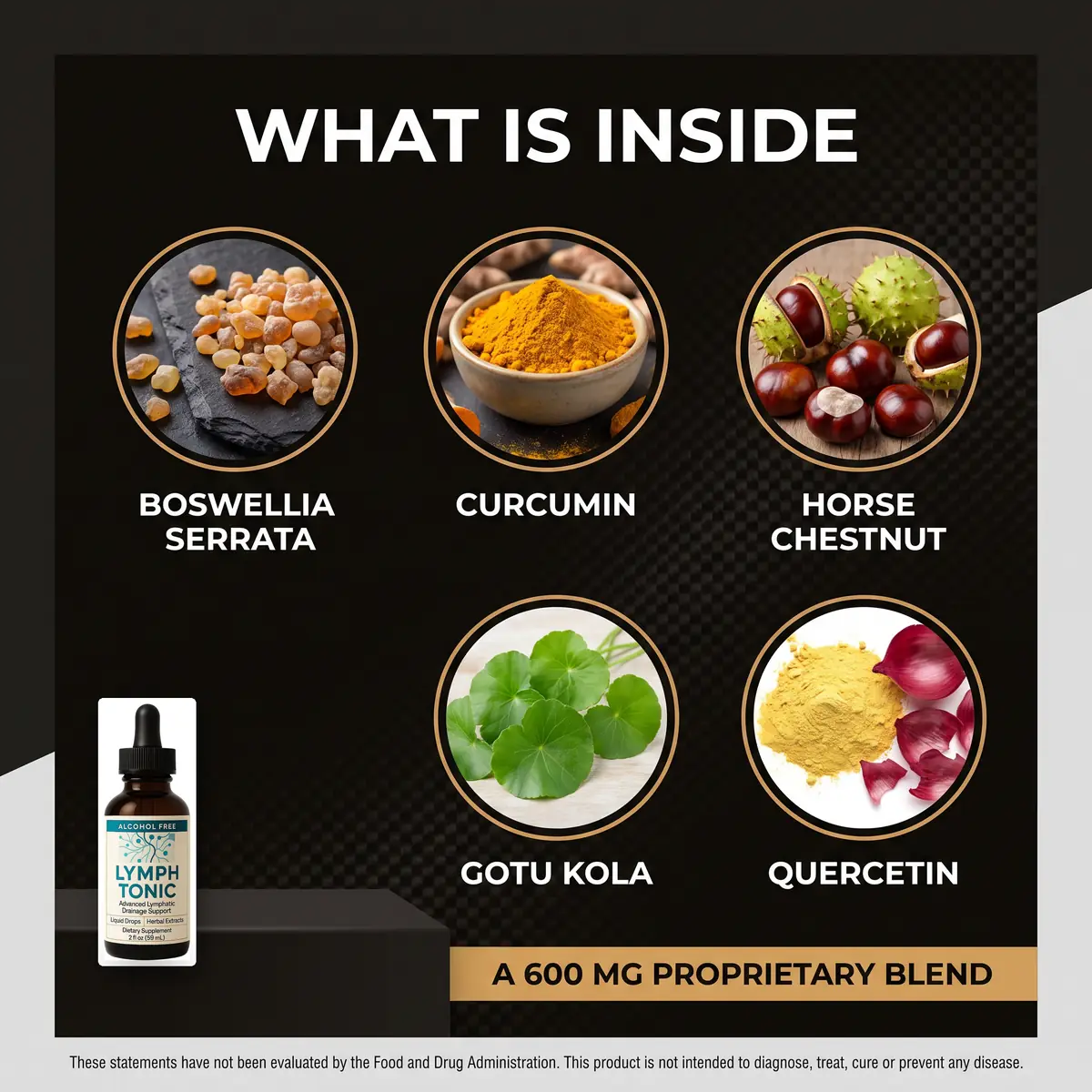
LymphTonic is built from recognizable botanicals in an alcohol-free liquid — boswellia, curcumin, horse chestnut, gotu kola and more — paired with black pepper and a phospholipid base for absorption, and backed by a 60-day guarantee.
See LymphTonic Packages
Whole herb vs standardized extract
A common question is whether a standardized extract is simply “better” than a whole herb. The honest answer is that they serve different purposes. A whole herb keeps the plant’s full spectrum of compounds — the actives plus the many minor constituents that may work together — but it is less concentrated and varies batch to batch. A standardized extract guarantees a consistent, concentrated level of the key actives, which is precisely what most clinical research uses, so its effects are more predictable.
For an ingredient prized for one well-studied active, a standardized extract offers reliability a raw powder cannot. Many thoughtful formulas aim for the best of both worlds — standardizing the actives that have a clear marker while retaining the natural profile where it matters. The takeaway is not that one is virtuous and the other isn’t; it is that a standardized label tells you what you are getting, whereas a bare herb name leaves you guessing.
How to read a proprietary blend
Sooner or later you will meet a proprietary blend — several ingredients grouped under a single total weight, without each individual amount broken out. This is a normal, legal practice that lets a company protect its exact recipe, and it is not a red flag by itself. What matters is the transparency around it. A trustworthy proprietary blend still:
- Names every ingredient in the blend, so nothing is hidden behind the word “proprietary.”
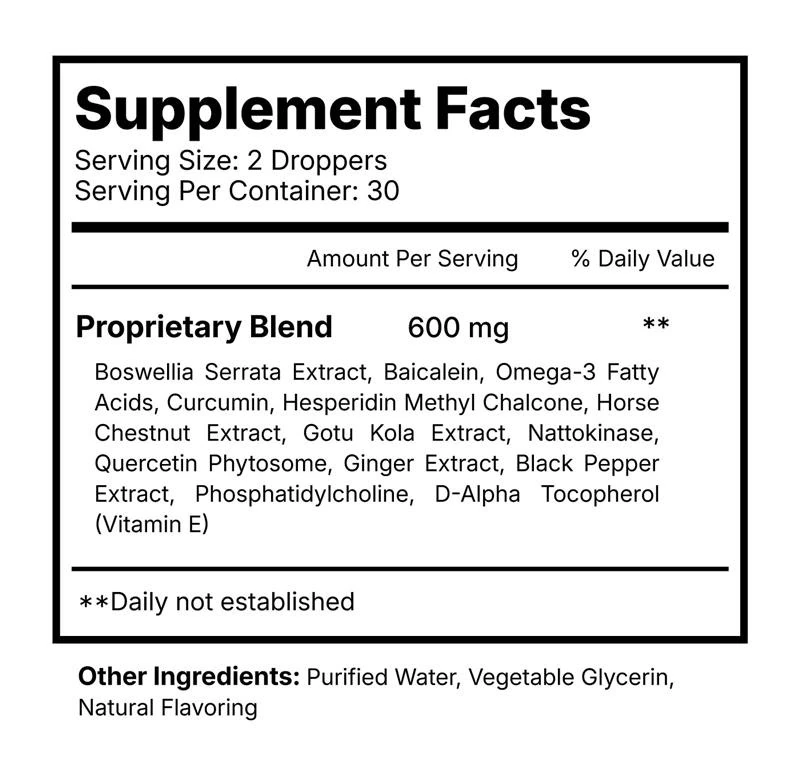
- States the total blend weight — for example, a 600 mg blend — so you know the overall dose.
- Uses recognizable, standardized forms of its actives rather than vague plant names.
- Lists ingredients in descending order by weight, as required, giving a sense of what dominates the blend.
LymphTonic’s own label is a good illustration: it names all thirteen actives inside a stated 600 mg blend, so you can see exactly which botanicals are present even though they share one total weight. That is the difference between a proprietary blend used for recipe protection and one used to hide a thin formula.
Why this matters for a lymphatic and detox formula
A formula aimed at lymphatic drainage and detox support leans on botanicals whose value lives in specific compounds — boswellic acids, aescin, gingerols, curcuminoids and more. Standardization is what ensures those compounds are actually present in a known amount, rather than left to the luck of the harvest. Pair that with a smart delivery strategy — the phospholipid and black-pepper approach described in our phosphatidylcholine and phospholipid absorption guide — and you have ingredients that are both consistent and absorbable. For the bigger picture of how the system works, see our overview of how to support lymphatic drainage naturally.
Your quick label-reading checklist
- A named marker and percentage — e.g. “standardized to 65% boswellic acids.”
- An extract ratio for context — ideally alongside, not instead of, a standardization figure.
- “Extract” rather than only a raw herb name — when the active is the point.
- Full ingredient transparency — every component named, even within a proprietary blend, with the total weight stated.
- A delivery strategy — absorption support for the fat-soluble or poorly-soluble actives.
A note on labels and claims
A supplement label is a regulated document with real limits on what it may say, and reading it well is a skill worth having. The NCCIH guide to using dietary supplements wisely is a good companion; so is the explainer on how alcohol-free glycerin tinctures differ from alcohol extracts, since the solvent is part of what the label is describing.
Standardization describes the composition of an ingredient — how much of a marker compound it contains — and nothing more. It is not a medical claim, and a high percentage does not mean a product treats anything. Dietary supplements are not intended to diagnose, treat, cure or prevent any disease, and no label percentage changes that. What standardization does give you is honesty about strength and consistency, which is exactly what you want when comparing your options. If you are pregnant or breastfeeding, take prescription medication, or have a medical condition, check with your doctor before starting any new supplement.
Frequently asked questions
What does standardized extract mean on a supplement label?
A standardized extract is a botanical extract processed so that it contains a guaranteed, consistent amount of one or more key compounds — for example “standardized to 95% curcuminoids” or “65% boswellic acids.” Standardization turns a naturally variable plant into a predictable, measurable ingredient, so that each batch and each dose delivers a known level of the active you actually care about. It describes consistency of composition, not a medical claim.
What is a marker compound?
A marker compound is the specific molecule a manufacturer measures and guarantees when standardizing an extract — such as curcuminoids in turmeric or aescin in horse chestnut. Sometimes the marker is the main active itself; sometimes it is a reliable, easy-to-measure stand-in used to confirm the extract’s identity and strength. Either way, it is the number that lets you compare one product against another on a like-for-like basis.
What does a ratio like 10:1 mean on an extract?
An extract ratio such as 10:1 means that ten parts of raw herb were concentrated down into one part of finished extract. It tells you how concentrated the material is relative to the starting herb, but on its own it does not guarantee the level of active compounds. A ratio is most meaningful when paired with a standardization figure, which pins down the actual amount of the marker compound.
Is a standardized extract better than a whole herb?
Neither is universally better; they serve different purposes. A whole herb keeps the plant’s full spectrum of compounds but varies from harvest to harvest and is usually less concentrated. A standardized extract guarantees a consistent, concentrated level of key actives, which is what most clinical research uses. For an ingredient valued for a specific active, a standardized extract offers predictability that a raw powder cannot.
What does “proprietary blend” mean and is it a problem?
A proprietary blend lists several ingredients together under one total weight without breaking out each individual amount, which protects a formula’s recipe. It is a normal and legal practice. The key is transparency around it: a trustworthy label still names every ingredient in the blend, states the total weight, and uses recognizable standardized forms, so you know exactly what is present even if exact per-ingredient milligrams are grouped.
- U.S. Food & Drug Administration. “Dietary Supplement Labeling Guide.” FDA. fda.gov
- National Center for Complementary and Integrative Health. “Using Dietary Supplements Wisely.” NCCIH. nccih.nih.gov
- van Breemen RB, Fong HH, Farnsworth NR. “The role of quality assurance and standardization in the safety of botanical dietary supplements.” Chemical Research in Toxicology. 2007. pubmed.ncbi.nlm.nih.gov
- Noviana E, Indrayanto G, Rohman A. “Advances in Fingerprint Analysis for Standardization and Quality Control of Herbal Medicines.” Frontiers in Pharmacology. 2022. ncbi.nlm.nih.gov
- United States Pharmacopeia. “Dietary Supplements Standards.” USP. usp.org
† These statements have not been evaluated by the FDA. This product is not intended to diagnose, treat, cure or prevent any disease. This article is for general information only and is not medical advice.